Brilliant Blue Water-Soluble Colour for Cleaning Product Manufacturing
Product Overview
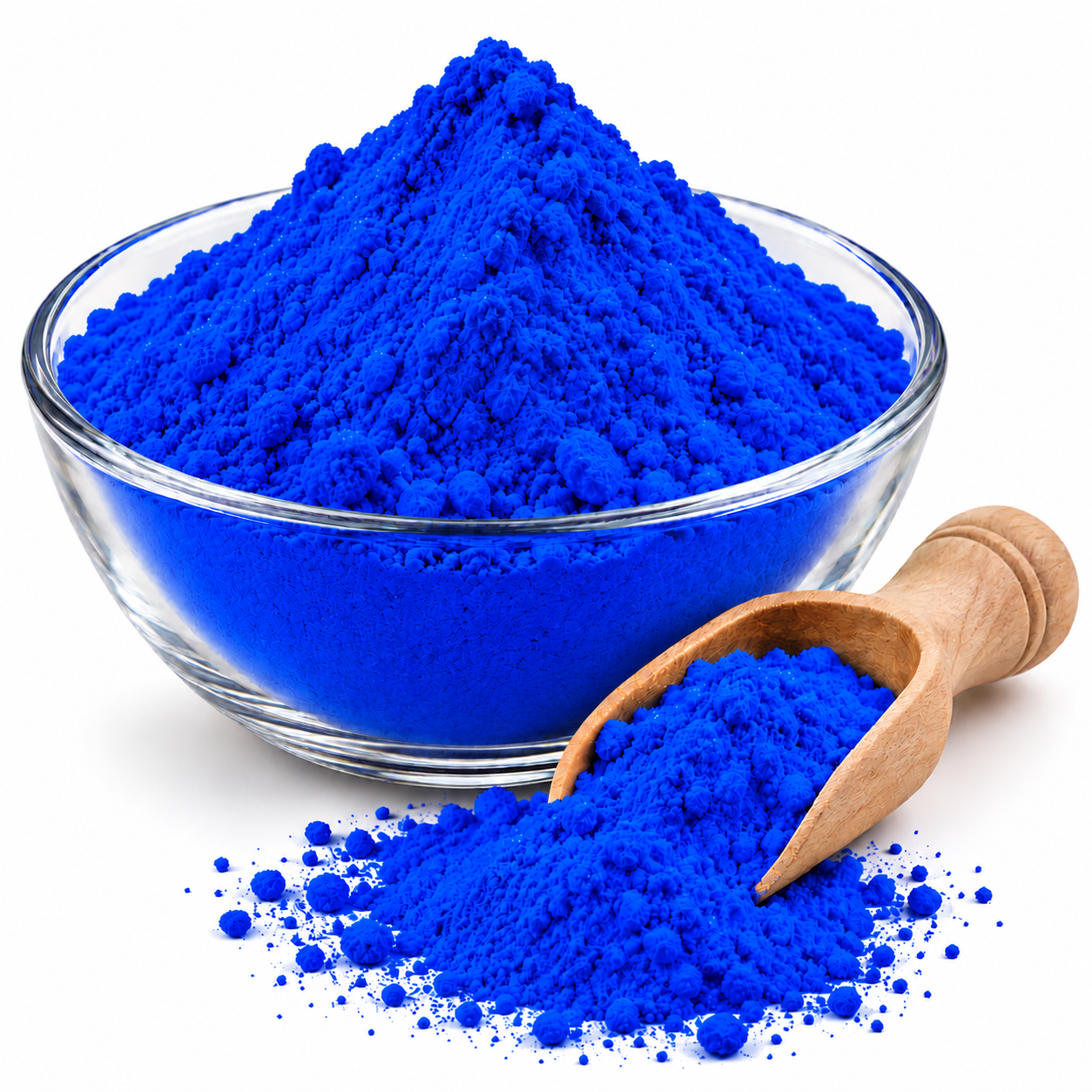
Brilliant Blue is a vivid blue, water-soluble synthetic colour suitable for adding an attractive and consistent blue shade to compatible water-based cleaning and household formulations.
It is supplied as a concentrated colouring raw material and is suitable for manufacturers, formulators and small-scale businesses producing products such as liquid detergents, floor cleaners, toilet cleaners, dishwash liquids, laundry products, liquid soaps and multipurpose cleaners.
Only a small quantity may be required to achieve the desired shade, depending on the formulation, product concentration and required colour intensity.
Important: Brilliant Blue is used primarily for colouring and visual appearance. It is not a cleaning, disinfecting or stain-removing active ingredient.
Key Features
- Brilliant and attractive blue shade
- Water-soluble colour
- Concentrated colouring raw material
- Suitable for compatible water-based formulations
- Useful for creating consistent product appearance
- Suitable for liquid cleaning product manufacturing
- Can be used for customized shade development
- Suitable for small-scale and commercial production
- Easy to incorporate when properly pre-dissolved
- Economical due to high colour intensity
Applications
Brilliant Blue can be used for colouring suitable water-based cleaning and household formulations where a blue appearance is desired.
Suitable Applications
- Liquid Detergent
- Floor Cleaner
- Toilet Cleaner
- Bathroom Cleaner
- Dishwash Liquid
- Laundry Liquid
- Liquid Soap
- Hand Wash
- Multipurpose Cleaner
- Cleaning Concentrates
- Other compatible water-based cleaning formulations
How Does Brilliant Blue Work?
Brilliant Blue acts as a colouring agent rather than a cleaning active.
When properly dispersed or dissolved in a compatible water-based formulation, the colour provides a blue appearance to the finished product. The final shade depends on the amount of colour used, formulation composition, pH, raw materials, dilution level and product base.
Because different formulations interact differently with colours, a small trial batch should always be prepared before commercial production.
Recommended Method of Incorporation
For better colour distribution, Brilliant Blue should preferably be dissolved or dispersed in a small quantity of compatible water before adding it to the main batch.
General Process
- Take a small quantity of clean water separately.
- Add the required quantity of Brilliant Blue.
- Mix until the colour is uniformly dissolved/dispersed.
- Add the prepared colour solution slowly into the main formulation.
- Continue mixing until the colour is completely and uniformly distributed.
- Check the final shade after the formulation is fully mixed.
- Adjust the colour gradually if a stronger or lighter shade is required.
Avoid adding a large quantity of dry colour directly into the finished product without testing, as this may cause uneven colour distribution or localized colour concentration.
Recommended Dosage
There is no universal fixed dosage because the required quantity depends on the formulation and desired shade intensity.
A practical approach is to start with a very small quantity and gradually increase until the desired blue shade is achieved.
Recommended Trial Method
Prepare a small test batch first and evaluate:
- Colour intensity
- Uniformity
- Shade after dilution
- Stability during storage
- Compatibility with surfactants
- Compatibility with fragrance and other raw materials
- Colour stability at the formulation’s working pH
The final commercial dosage should be established through formulation trials.
Formulation Compatibility
Brilliant Blue may be suitable for a variety of water-based cleaning formulations, subject to compatibility testing.
Particular attention should be given when using it in:
- Highly acidic formulations
- Highly alkaline formulations
- High-surfactant systems
- Formulations containing strong oxidizing ingredients
- Products exposed to prolonged sunlight
- Concentrated formulations that are later diluted
A compatibility and stability test is recommended before production at commercial scale.
Quality Control
Before approving a batch of Brilliant Blue for production, check:
- Appearance
- Colour strength
- Solubility/dispersibility
- Presence of foreign particles
- Batch-to-batch shade consistency
- Compatibility with the intended formulation
- Colour stability after dilution
- Storage stability
A finished-product sample should also be retained for future batch comparison.
Storage Instructions
- Store in a cool and dry place.
- Keep the container tightly closed when not in use.
- Protect from direct sunlight.
- Protect from moisture and humidity.
- Avoid excessive heat.
- Prevent water contamination.
- Store away from incompatible chemicals.
- Keep the original packaging properly sealed.
Handling Precautions
- Avoid inhaling colour dust during handling.
- Avoid unnecessary contact with eyes and skin.
- Use suitable gloves and protective equipment during manufacturing.
- Handle in a well-ventilated area.
- Wash hands thoroughly after handling.
- Keep away from food, beverages and animal feed.
- Keep out of reach of children.
- Follow the applicable SDS and workplace safety requirements.
Frequently Asked Questions
1. What is Brilliant Blue used for?
Brilliant Blue is primarily used as a colouring agent to give compatible cleaning and water-based formulations an attractive blue appearance.
2. Is Brilliant Blue water soluble?
It is intended for use as a water-soluble colouring raw material in compatible water-based formulations. A small trial should be performed with the specific formulation before production.
3. Can it be used in liquid detergent?
Yes, it can be used for colouring compatible liquid detergent formulations.
4. Can Brilliant Blue be used in floor cleaner?
Yes, it can be used to provide a blue shade to suitable floor-cleaner formulations.
5. Can it be used in toilet cleaner?
It may be used in compatible toilet-cleaner formulations, but acidic systems should be tested carefully for colour stability and compatibility before commercial production.
6. Can it be used in dishwash liquid?
Yes, it may be suitable for colouring compatible dishwash-liquid formulations.
7. Can it be used in hand wash?
It may be used in suitable water-based hand-wash formulations after compatibility testing.
8. How much Brilliant Blue should I add?
There is no single fixed dosage. Start with a small trial quantity and gradually increase until the desired shade is achieved.
9. Should the colour be dissolved before adding it?
Preferably yes. Pre-dissolving or properly dispersing the colour in a small quantity of compatible water can help achieve more uniform colour distribution.
10. Can I add the dry colour directly to the product?
It may be possible depending on the formulation, but direct addition can sometimes create uneven colour distribution. Pre-dissolving is generally preferred for better control.
11. Does Brilliant Blue improve cleaning performance?
No. Its primary function is to provide colour and improve the visual appearance of the product.
12. Will the same dosage give the same shade in every product?
Not necessarily. Different surfactants, pH levels, raw materials, concentrations and dilution ratios can affect the final appearance.
13. Can Brilliant Blue be used in concentrated cleaning products?
Yes, where the formulation is compatible. A stability test should be conducted because the concentrated environment can behave differently from the final diluted product.
14. Can I use Brilliant Blue to make custom shades?
Yes. It can be evaluated individually or in combination with other compatible colours to develop customized shades. Proper small-batch testing is recommended before production.
Disclaimer
This product is supplied as a formulation raw material for colouring suitable products. Actual performance, colour intensity, stability and compatibility may vary depending on the formulation, pH, concentration, raw materials, processing conditions and storage conditions.
The manufacturer/formulator is responsible for conducting appropriate compatibility, stability and performance testing and for ensuring that the finished product, labelling, intended use and manufacturing process comply with applicable local laws, regulations and standards.
Small-batch testing is recommended before commercial production.